25–35%
Return rate in Indian fashion e-commerce
Most reverse shipments are size returns — not damaged goods, not changed minds. Pure guesswork.
↑ apparel-only of all online orders
Find the look. Lock the fit. Clear the stock.
One AI pipeline that connects buyer personalization to seller inventory clearance. Multimodal search, fabric-aware fit confidence and margin-protected bundles — in a single flow.
Figures are project estimates, not measured results.
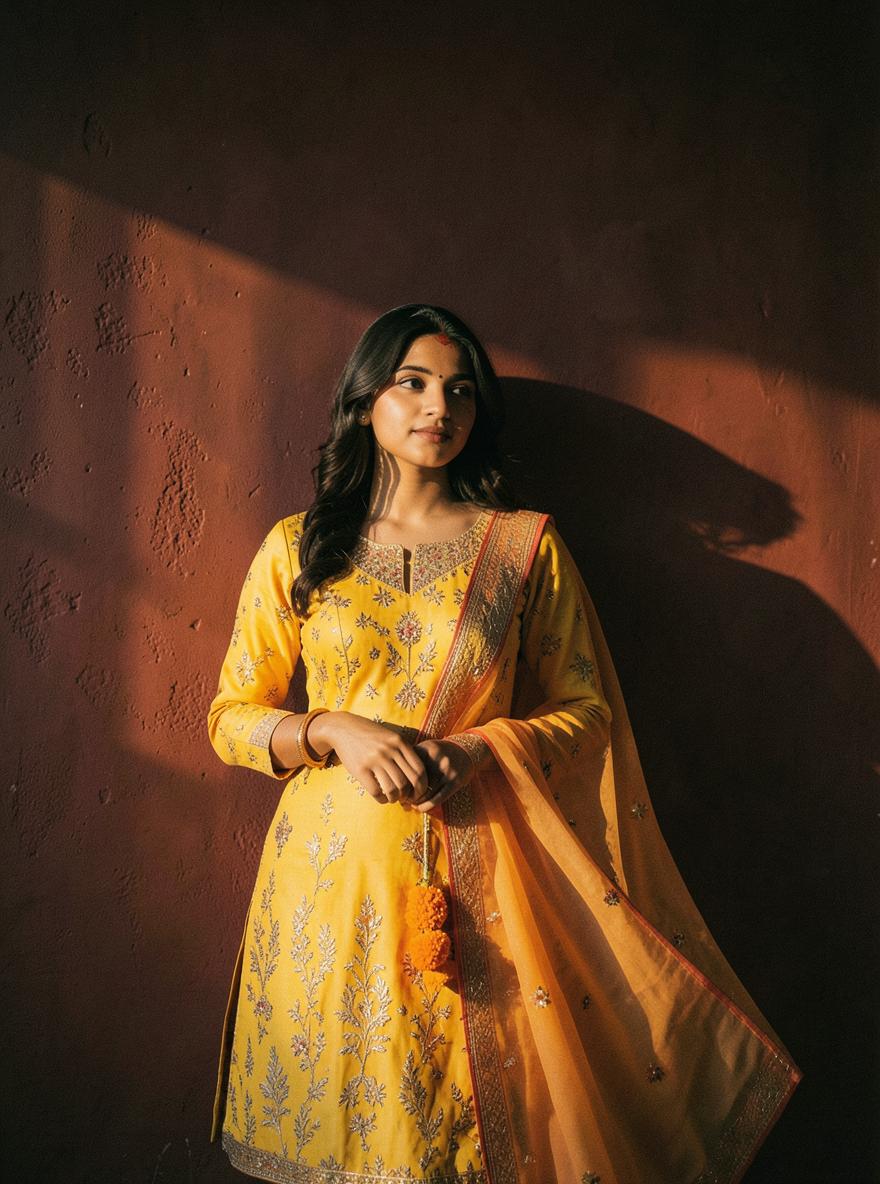
Shoppers can't find outfits for a specific occasion. They guess the wrong size and send it back. Sellers pay twice — once for the return, and again for the seasonal stock that never moves.
25–35%
Most reverse shipments are size returns — not damaged goods, not changed minds. Pure guesswork.
Rs.120–180
Pickup, re-pack, re-inspect, re-shelve. Every unnecessary return burns margin the order never had.
15–20%
Unsold seasonal inventory sits in warehouses, depreciating quietly while the next collection lands.
Figures are project estimates, not measured results.
The two leaks are treated separately by every tool on the market. Zero-Return closes both with one pipeline.
Buyer personalization feeds seller inventory clearance. The same embedding that helps a shopper find the right haldi outfit also tells the seller exactly which dead stock completes it.
Search by mood, occasion or a reference photo.
“Outdoor haldi outfit under Rs.2,500” becomes structured filters plus a rich visual caption — then a fused text + image vector search across every SKU.
Know the fit before you buy.
Height, weight, body shape and one anchor size you already own — in 10 seconds. Zone-by-zone scores that understand fabric stretch and ethnic garment ease.
Dead stock that completes the look.
Slow-moving stock in the buyer's exact size, matched to the outfit at ≥0.78 visual similarity — offered privately as a stylist add-on, priced with margin protection.
Three stages, one request. Follow the pipeline from a typed sentence to a cart that clears warehouse stock. The stages advance on their own — click one to explore it.
Multimodal search over a fully embedded catalog.
Parses your text and photo into one structured query — hard filters plus a visual caption.
Fuses text and image signals to re-rank the filtered catalog down to six looks.
Two paths, one honest answer — before the order is placed.
Exact at shoulders · relaxed at waist
Slow stock meets the exact person who wants it — quietly.
Floor: COGS + marginal shipping
Deeper tiers unlock above Rs.2,000 cart value.
Type the occasion you're shopping for, or use the sample query. Then add a look to see the fit check and the private bundle offer.
Not a wrapper around a chatbot. Three systems doing the unglamorous work underneath.
A single multimodal request is split into two concurrent workers. The VLM parser turns messy human language into hard filters and a visual caption in one structured JSON call; the visual encoder reads the reference photo for embroidery, prints, borders and silhouette. Their embeddings are fused — not concatenated — so a photo of a mirror-work border still ranks above a cheaper plain kurta that happens to match the words.
The default path asks four things and takes ten seconds. The precision path is opt-in, because a camera prompt at checkout is where most sizing tools lose the shopper. Both paths feed the same Garment Ease & Stretch Engine, which compares body numbers to the garment's actual cut and fabric behaviour — a raw silk bodice and a cotton-lycra bodice with identical measurements do not fit the same way.
Discount depth is a function of age and cart value, and every rung is checked against COGS + marginal shipping before an offer is generated. If a bundle would breach the floor, it is not shown. That constraint is what makes zero-CAC liquidation safe to run at scale: growth never comes out of contribution margin.
A production-shaped stack built for async I/O, vector recall and real catalog sync.
One avoided return pays for itself four to five times over. Everything else is upside.
SaaS base covers catalog embedding, fit engine and widget hosting.
No lock-in on month one. You pay the take-rate only when the engine moves merchandise.
Figures are project estimates, not measured results.
Every risk below shipped with a product constraint, not a mitigation slide.
Discount language on a premium storefront cheapens the label and trains customers to wait for markdowns.
Never label add-ons “clearance”. Offers are cart-drawer only, styled as look completions, with colour and occasion compatibility enforced before a bundle is eligible.
Asking for body photos at checkout is a conversion cliff, especially on low-end Android devices.
Default to the 10-second anchor-brand selector. The camera scan stays strictly opt-in, framed as an upgrade that unlocks the guarantee badge — never a gate.
Kurta chest measurements include ease. Treating them as body measurements produces confidently wrong recommendations.
Garment dimensions and body dimensions live in separate tables with an explicit ease field, so a 40-inch kurta chest maps to a 36-inch body chest by design.
From working prototype to a category-wide inventory layer.
Rule-based search and fit scoring over a 24-SKU sample catalog, with cart-drawer bundling. No backend yet.
Precision path in production, return-rate A/B against control, and a Unicommerce sync for multi-warehouse stock truth.
Aggregate zero-result searches and fit mismatches into a demand report, so buying teams stop over-ordering the wrong silhouettes.
Fit-guaranteed returns routed as verified, size-labelled stock to the next buyer instead of the warehouse — closing the loop completely.